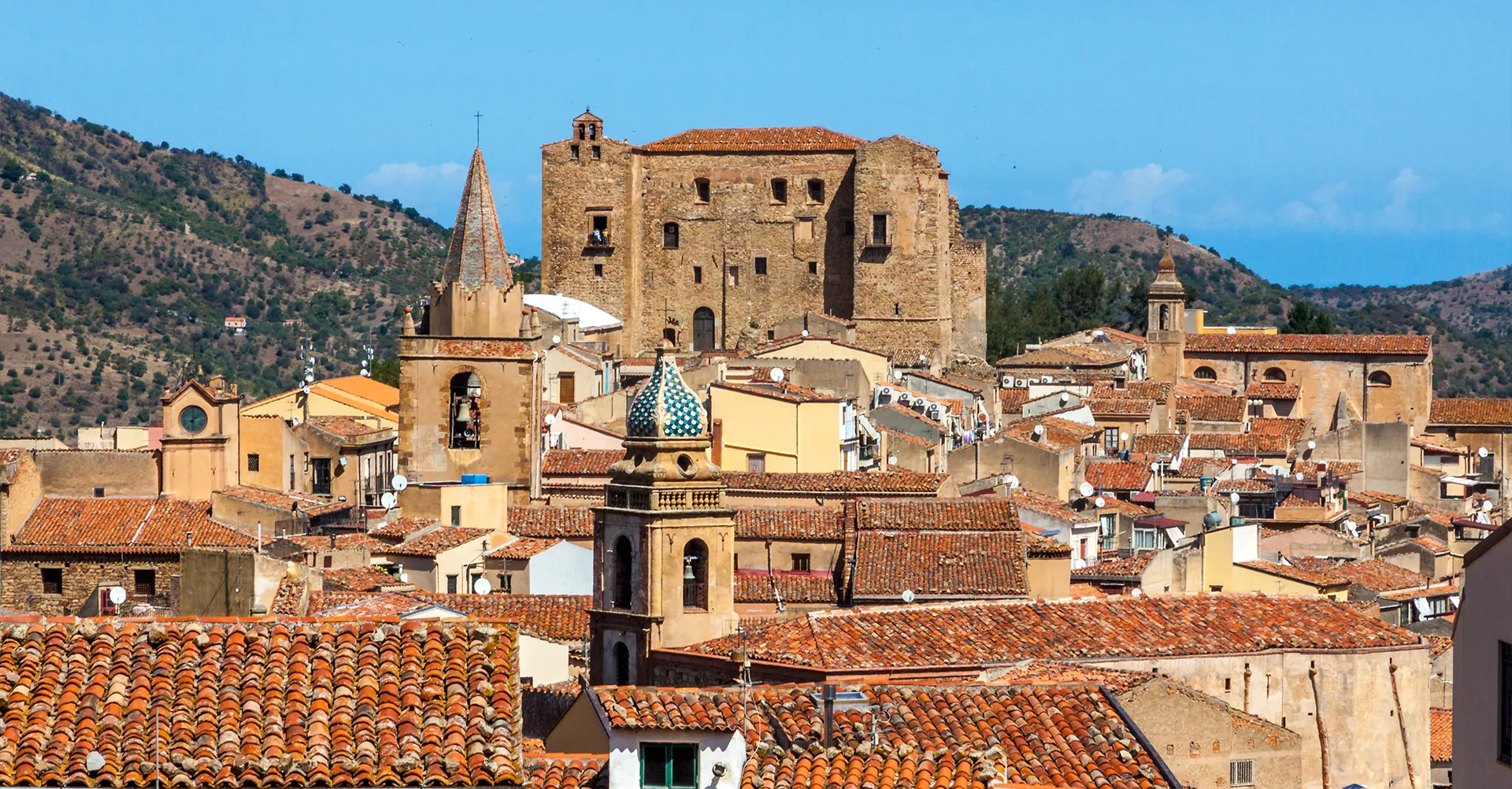
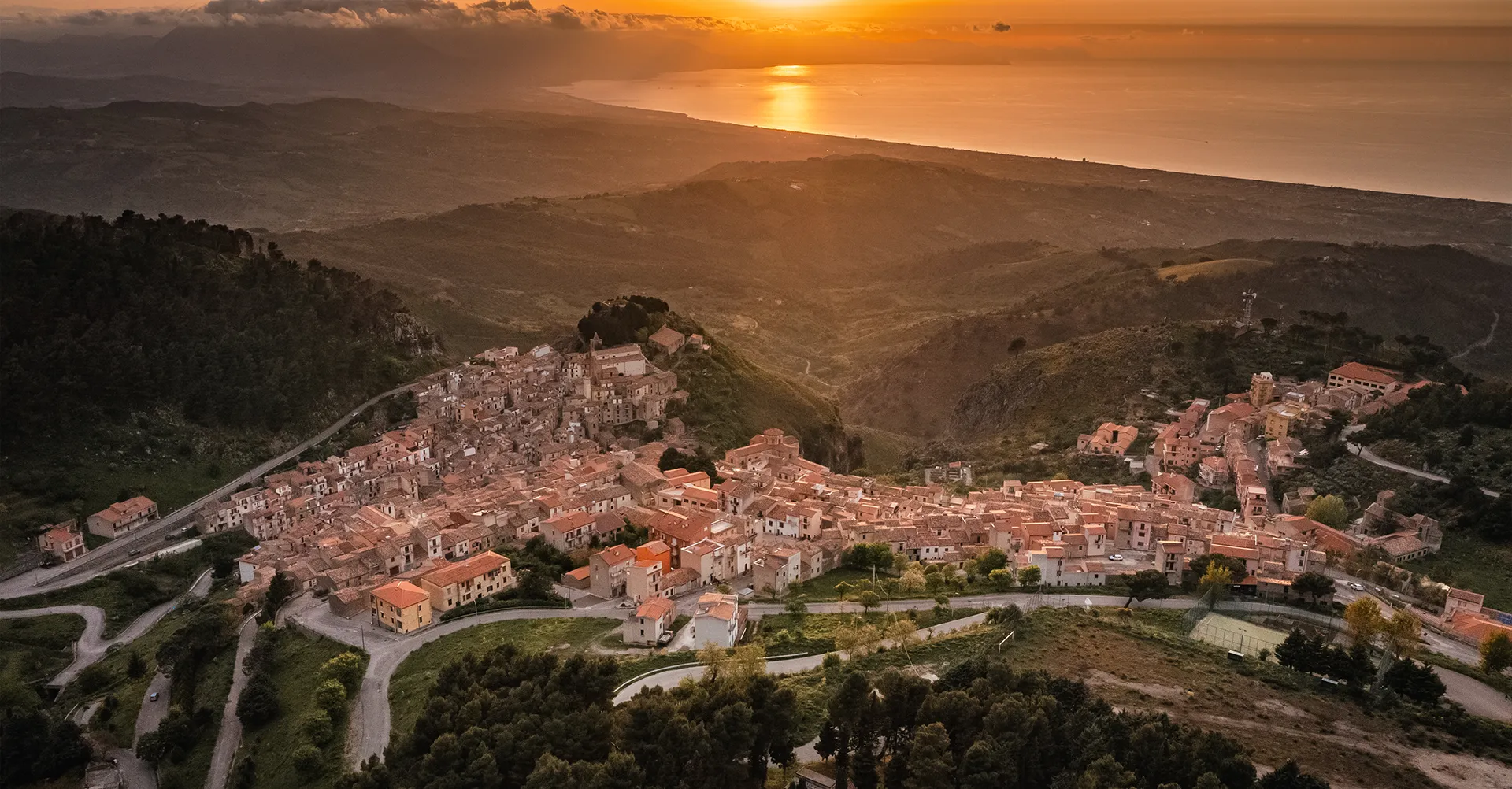
Castelbuono, about 90 km from Palermo and located at the foot of Mount Milocco within the Madonie Park, is one of Sicily’s most charming medieval villages.
The origins of the town date back to the Middle Ages. In 1316, Francesco I Ventimiglia built the castle on the site of an earlier settlement, around which the village gradually developed. From that moment on, the Ventimiglia family established their residence here, turning the castle into the heart of local power. In the 16th century, the village also welcomed prominent artists who helped enrich its cultural and artistic heritage.
Among the main attractions are the Ventimiglia Castle and the Church of Santa Maria Assunta, although the surrounding area offers many other historical and religious landmarks.
The castle was built on the remains of an ancient Byzantine rural settlement, later transformed during the Arab-Norman period, and commissioned by Count Ventimiglia on the hill of San Pietro. Today, it features a complex structure spread over three levels plus an underground floor, consisting of a central building and four towers. One of its highlights is the Palatine Chapel of Saint Anne, created at the end of the 17th century at the request of the Ventimiglia family. The chapel is richly decorated with gilded stuccoes depicting angels and allegorical figures, and it houses the Sacred Skull of Saint Anne on the main altar, displayed in a frontal adorned with coral, gold, and pearls. Many traditions and legendary tales revolve around this relic.
The Church of Santa Maria Assunta, also known as the Matrice Vecchia (Old Mother Church), was built around 1362 at the request of Francesco II Ventimiglia. Over the centuries it underwent several modifications: the original three naves were expanded to four, and the portico was added in the 16th century.
Also worth visiting is the Church of the Nativity of the Blessed Virgin Mary, known as the Matrice Nuova (New Mother Church), built between the late 16th and early 17th centuries. Overall, Castelbuono is home to around twenty religious buildings. Cultural highlights also include the Civic Museum, which displays artefacts linked to the cult of Saint Anne, materials documenting the village’s urban development, an art gallery dedicated to the modern era, and temporary exhibitions held throughout the year. Another fascinating site is the Francesco Minà Palumbo Natural History Museum, which preserves the collections gathered by the naturalist between 1837 and 1899 during his research in the Madonie mountains.
Castelbuono is not only about art and history, but also about culinary tradition. Its typical cuisine is one of the most authentic expressions of the Mediterranean diet: simple yet high-quality ingredients such as olive oil, almonds, raisins, lemon, pistachios, and parsley come together to create flavourful dishes, balancing humble traditions with refined taste.