An itinerary to explore Palermo, a city of layered charm where centuries of dominations, cultures, and architectural styles coexist. A journey through the vibrant heart of the historic center, among monumental squares, historic markets, and unique artistic heritage in the Mediterranean.
The tour begins at Piazza Giulio Cesare, better known as Piazza Stazione, surrounded by eclectic buildings ranging from Neoclassical to Liberty style. At its center stands the monument dedicated to Vittorio Emanuele II. From here, the urban landscape opens onto Via Roma, one of the city’s main arteries, while on the opposite side runs Via Maqueda, leading to Piazza Verdi, home of the famous Teatro Massimo.
Continuing along Via Maqueda, visitors enter one of the most representative streets of both historic and contemporary Palermo, where culture, commerce, and popular traditions intertwine. Along the way, you encounter iconic places such as the Ballarò Market, Piazza Pretoria, and the Quattro Canti, the geometric heart of the historic center. This street also reflects the city’s multicultural spirit, evidenced by the presence of communities from different countries and the daily life they bring to the area.
The Quattro Canti is one of the most scenographic Baroque crossroads in the city, while Piazza Pretoria is renowned for its monumental fountain, surrounded by historic buildings and sculptural details that make it one of Palermo’s most iconic spaces.
The route continues toward the Church of Santa Caterina d’Alessandria, reachable via Via Maqueda and Via Bellini. This religious complex is one of the finest expressions of Palermo Baroque. Originally established as a place of refuge for repentant women, it later became an aristocratic monastery. Its interior is a decorative explosion of marble, stuccoes, and colors that fully embody Sicilian Baroque aesthetics.
The next stop is the Church of the Gesù, also known as Casa Professa, located near the Ballarò Market. Considered one of the masterpieces of the city’s Baroque style, it features a richly decorated interior that contrasts with its more sober exterior. Its Latin cross layout and extraordinary ornamental richness make it one of the most impressive religious sites in the city.
Just a few steps away lies the Ballarò Market, one of Palermo’s most vibrant historic markets. Here the city reveals its most authentic character: stalls of fish, spices, fruit, and local produce blend with the voices of vendors, creating an intense and engaging atmosphere. It is a place that expresses Palermo’s popular tradition in its purest form.
After a break, the tour continues toward the ancient Jewish quarter of Harat al-Yahud, one of the most significant historical testimonies of the Jewish presence in the city until the 15th century. The area still preserves traces of its original identity and includes buildings of great historical value, among them the current Church of San Nicolò da Tolentino, built on the site of the former synagogue.
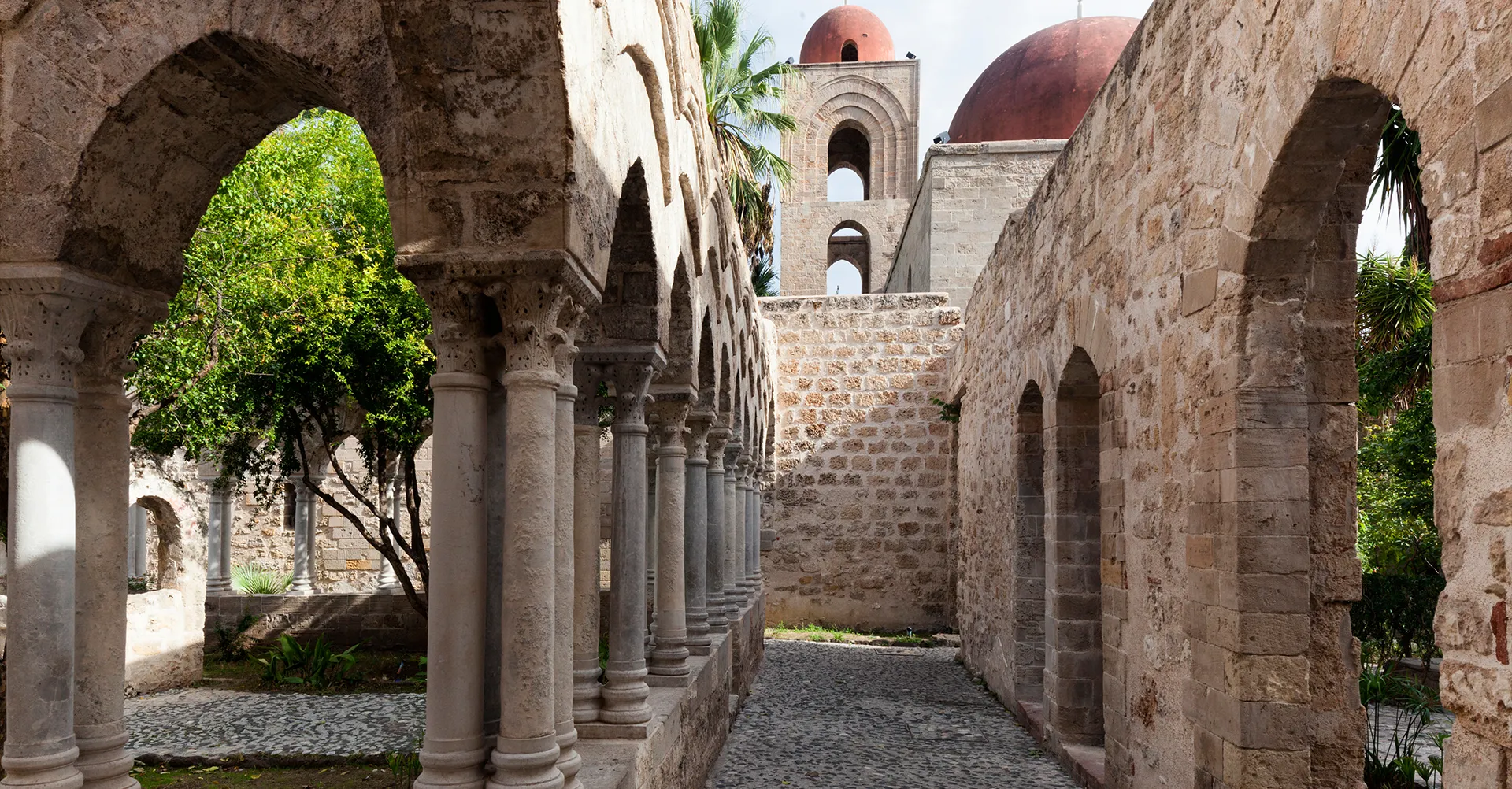
The journey then proceeds to the Church of San Giovanni degli Eremiti, one of the most recognizable symbols of Arab-Norman Palermo. The building, likely constructed over a former mosque, still maintains a strong connection to its Eastern origins. Its distinctive red domes make it one of the most iconic landmarks of the city skyline.
The itinerary concludes at Piazza Indipendenza, a monumental square that hosts some of the city’s most important institutional and historical sites. From here, visitors can admire the Palatine Chapel, the Norman Palace, and Porta Nuova. At the center of the square is a green area featuring the monument dedicated to those who fell for Italian independence, symbolically closing the journey through Palermo’s history.