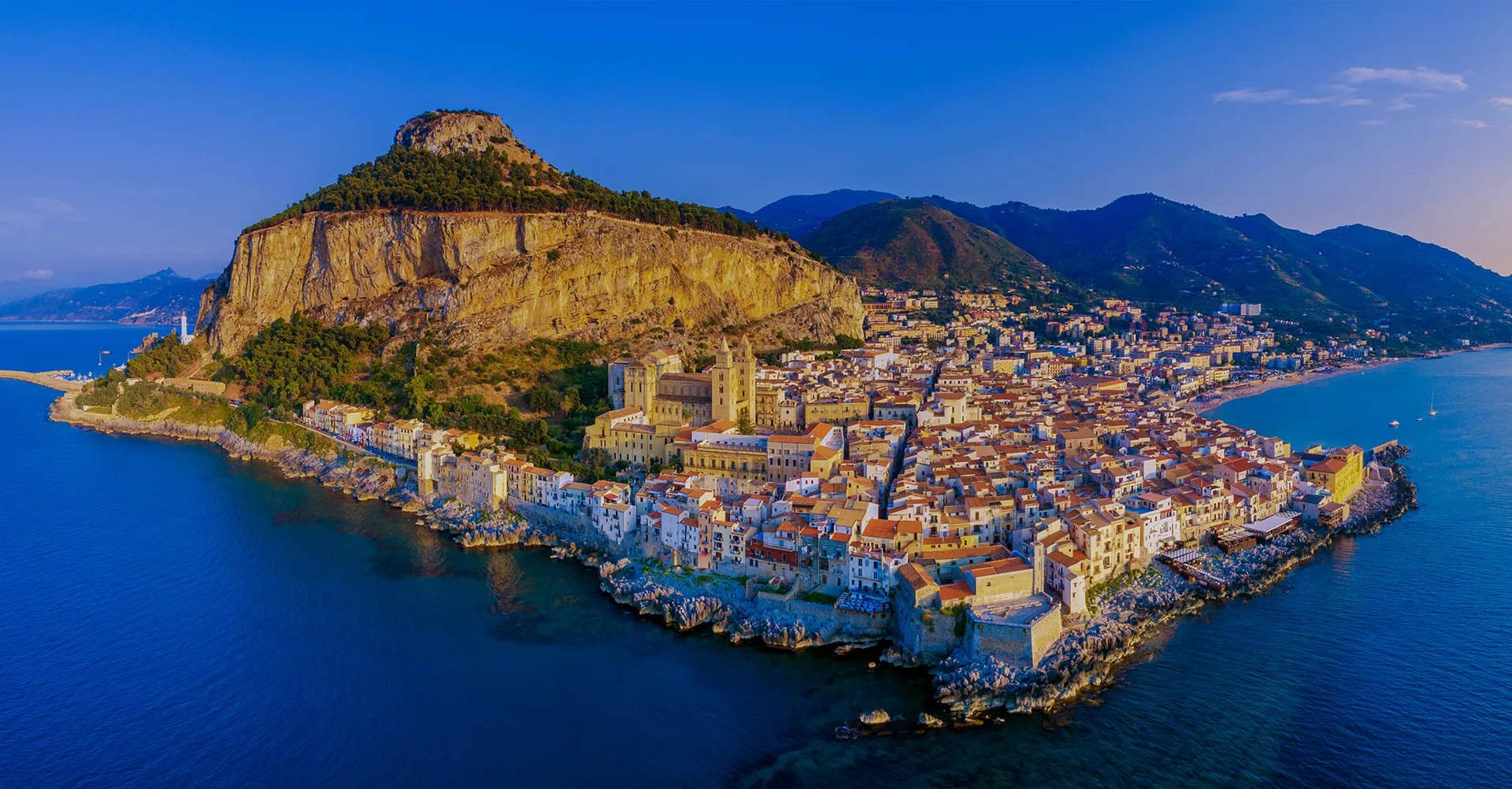
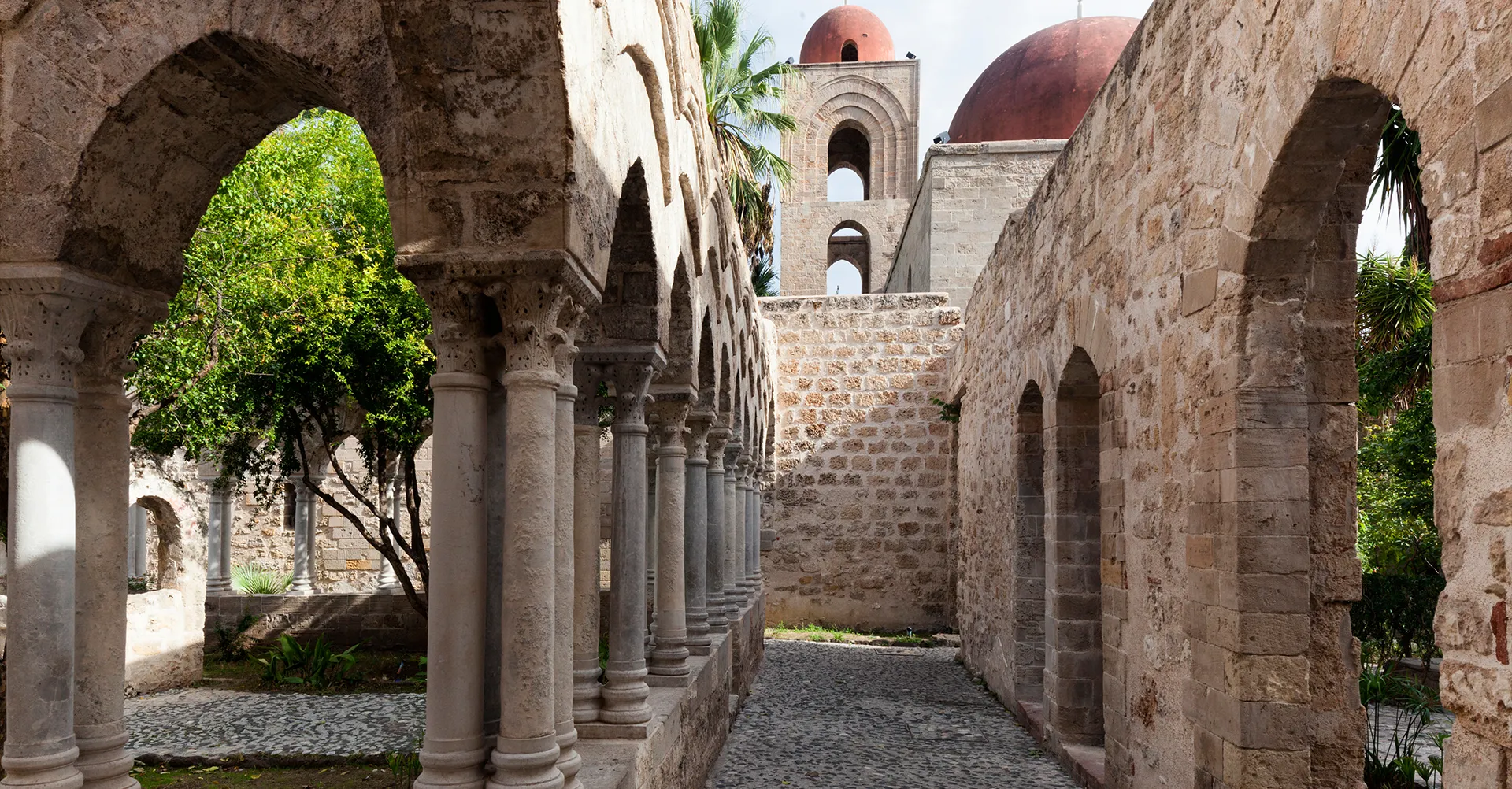
Just a few kilometers from our villas, along the Tyrrhenian coast, lies Cefalù, one of Sicily’s most captivating destinations and among the most beloved villages in Italy. It is a place that perfectly combines sea, history, and tradition, making it ideal for a day trip or a special evening spent wandering through its alleys, bars, and seaside restaurants.
Cefalù rises at the foot of its famous Rocca and preserves a rich artistic and cultural heritage, set within the stunning natural landscape of the Madonie Park. Walking through the historic center means crossing stone-paved streets, small shops, lively squares, and postcard-perfect views at every corner.
During your visit, you can choose to dedicate your time to a cultural tour among monuments and museums or enjoy a few hours of relaxation on the beach, with golden sand and crystal-clear waters. And of course, a culinary stop is a must: Cefalù offers countless restaurants where you can taste traditional Sicilian dishes, from fresh seafood to local pastries, ideally enjoyed by the sea or in one of its charming narrow streets.
For those who enjoy nightlife, Cefalù is also perfect in the evening: cocktail bars, music, and seaside venues keep the atmosphere alive well into the night.
Among its most famous attractions are the stunning Arab-Norman Cathedral, the renowned “Portrait of an Unknown Man” by Antonello da Messina housed in the Mandralisca Museum, the impressive Rocca, the characteristic Medieval Washhouse, and the beaches that make this village a truly unique destination.
Beyond the main highlights, there are other places well worth visiting.
Bastione di Capo Marchiafava
Near the Church of Itria and overlooking the rocky coastline, the Bastione di Capo Marchiafava was once a strategic defensive point for the town. Today it is one of the best panoramic spots in Cefalù, offering breathtaking views over the sea and the village.
It requires climbing a few steps to reach, but the view is more than worth the effort.
The Medieval Washhouse
In the heart of the historic center lies this fascinating and historically rich site, once used as a public washouse. It is accessed via a lava-stone staircase leading to a series of basins arranged in steps, still fed today by flowing spring water.
A striking and authentic corner, enhanced by a famous 1655 inscription that reads:
“Here flows the Cefalino, more wholesome than any other river, purer than silver, colder than snow.”
Osterio Magno
Between Via Amendola and Corso Ruggero, just a few steps from the Cathedral, stands the imposing and fascinating Osterio Magno, traditionally believed to have been the residence of Roger II. The building features architectural elements from different periods: the oldest section is made of tuff and golden limestone, while the more recent tower is distinguished by its elegant mullioned window.